

Treading in Substack's Manosphere Muck
Locking ourselves in the women's dorm isn't an option

This isn’t about one vile man stepping into our public square. It’s about how we maintain access to our public square when a corner of it gets muddy.
The calls are coming from women on Substack whom I admire greatly. Women who write about feminism, but also women who just write frankly about being women in this crazy year 2026. And women who write about passions wholly unrelated to being a woman, though any woman writing in 2026 is also writing about being a woman whether she means to or not.
These women say he should be banned—who let him on here?—oh, the double standard—his presence threatens our safety—this isn’t the platform I thought it was—community standards—his crimes should preclude him from being here—I don’t even want to see his name1
They argue that Substack should “ban” a truly vile person (I’ll refer to him as AT because this isn’t about him2) not because of what he’s written on Substack, but because of who he is outside of Substack. Although it really hurts me to say this, I don’t think it works to punish people before they’ve actually violated the rules.
Even if they’re truly despicable.
Grand Pause: It is hard for me to disagree with my fellow feminists and very hard for me when part of the reason they want to run is the visceral reaction they (and I) have to seeing the names of infamous perpetrators of violence against women. But I disagree out of respect and care. This argument isn’t about AT, but about how we manage our online public square.
Managing speech in the physical world
I’m trying to come up with a real-life parallel to my current proximity to vile men on Substack, but there isn’t a clear one. Keeping the offensive formal speech of strangers out of my life in the physical world turns out to be relatively easy. I have managed never to attend a speech by a noxious misogynist for 61 years now, and it’s not like I had to work at it. I have also managed never to visit a Nazi bar.
But I do admit that having AT here on Substack feels a bit like having him move in down the street. I mean, what would I do if I saw him out walking his dog? I fantasize that I and all my dog-walking neighbors would spit in the road where he is about to tread, and I will admit I wouldn’t mind if a little spittle got on his shoes.
But I know what would really happen: I’d pretend not to see him. At worst, I’d have to live with constant fantasies of keying his car or live-catching gophers and releasing them in his yard. But I’m very sure that my neighbors would agree that keeping the peace—and not engaging with him—would be the way forward.
When the platforming is wider than reality
The Internet is not a street or a town or even the world. When you create a platform that spans unmeasurable, unseen space, how do you decide who gets to stand on it? Free speech absolutists would say that anyone should be allowed to be here, make money here, and anyone should be allowed to criticize them. But all mainstream platforms back off from free speech absolutism, as has Substack.
The community guidelines state:
Substack cannot be used to publish content or fund initiatives that incite violence based on protected classes. Offending behavior includes credible threats of physical harm to people based on their race, ethnicity, national origin, religion, sex, gender identity, sexual orientation, age, disability or medical condition.
Although there’s some ambiguity there—“credible threats”—it’s clear that if AT does publish anything like the sorts of vile crap he spews elsewhere, users can flag him and Substack says they will kick him off. But when I went to his profile in a private browser, the top piece contained advice to smile for five minutes. It’s hard to argue he should be removed for that.3
What bothers me about the argument that some vile human shouldn’t be “platformed” is that it tends to be selective. I notice that a lot of the chatter was about seeing his name at the top of the Bestsellers list, which made women uncomfortable. (Go to this footnote4 to read why that didn’t make me uncomfortable and for an easy solution that Substack could enact.) But what about all the other people who are writing things that would make us uncomfortable if we bothered to read it?
Free speech allows feminism to thrive on Substack. Feminists want to be able to speak freely of all the horrible things that men have done under the cloak of patriarchy. When we do that, a lot of people feel uncomfortable. If we argue that it makes us uncomfortable simply to know that vile men are on the same platform as us, can’t everyone make that argument about those who make them uncomfortable? What does a platform become if women are locked up and safe like we’re in a 1950s women’s dorm? It’s back to the repressive 1950s when women suffered in silence, until second-wave badass feminists of the 60s and 70s strode into the university square and grabbed hold of the microphone.

Real-life behavior and the Internet
On top of everything I’ve said so far, I wonder how far we have to take this idea of a scarlet letter attached to people’s names when they are rendered in pixels on our screens. What if we found out that another person on Substack had been not only accused but convicted and served a sentence for a heinous crime? Would we insist that Substack kick that person off for what they’d done in real life even if they had ten subscribers? Even if they wrote about nothing having to do with their conviction?
What if AT just continues to troll us by writing little pieces about how great it feels to smile, and how he loves puppies, and then offers up his latest recipe for tasty pasta sauce? Until he breaks the rules, I just don’t see how any woman can justify calling for Substack to remove him without realizing that once the precedent is set, the floodgates of accusations will open.
And women, queer people, and minorities are always the first to suffer when the witch hunts begin.
The difference between equal access to the platform and handing over the bucks
Robyn Pennacchia on Wonkette makes the one good, clear argument I’ve read: As long as AT follows the community guidelines, it’s hard to justify removing him. But Substack has ample reason to refuse to make money from his posts. This is a solution that we can all get behind: define a clear set of triggers for losing the option to monetize work, and apply those triggers to all of Substack. That could mean that your favorite writer would fall victim to the triggers, also, and we all have to be ready for that.

The problem is structural
Every platform faces the same problem: how to write their community standards to include as many people as possible and foster dialogue while also keeping people safe and not doling out rewards for bad behavior. Unfortunately, many platforms such as Meta actively reward people for bad behavior, though they also have their limits. Substack could certainly tighten up their community standards, and let’s hope their algorithm doesn’t go the way of Facebook, but the big question is how they enforce their own rules.5
I simply don’t think that a platform should get into the habit of kicking people off for who they are perceived to be, no matter how awful their past behavior has been. A good example is Ye, who spewed vile antisemitic rants for years before he got treatment for his mental illness. If he comes to Substack, should he be banned? If he went to Ghost (where many seem to be migrating) what would they do? I hope they’d wait to see whether he broke their community guidelines.
AT has not promised to reform, and as far as I know he may have violated community standards ten times since I read his smile post. If he has, we need to hold Substack to its word and insist that he be kicked off. But if he keeps to the rules, Substack would be setting an awful precedent by banning him without cause.
This is a perfect example of a deep structural problem with the Internet, and women running to a new platform every time there’s a conflict is not going to solve it. At least some women must stay and fight: we need to engage with platforms, demand that they clarify their community standards, and demand that they create tools that work for people to use to protect themselves.
Boycotts work in some situations. Boycotting X is a case in point. But boycotting Substack is counterproductive. If all the feminists retreat to the women’s dorm, we cede territory to the misogynists in an online forum that is quickly becoming our intellectual public square. I think of people like AT as the cranks that like to agitate at universities (and there’s some literal crossover here). They are attracted by the presence of so many people that they can get a rise out of. Does that mean we should drop out of the university? Hell, no. It means we need to engage when warranted, and hold the university’s feet to the fire about keeping us safe while not locking us away in the women’s dorm with a curfew.
Personally, I think a good thing is worth fighting for. The creeps will creep up no matter where you go, and we as a mass must stand up against them.
It’s not so hard to keep our feet clean
The reason I am staying (for now) on Substack is precisely because we are in avid conversation with each other and that Substack is giving us the tools to facilitate that conversation. Of course I run across writers whose work offends me (some of them are feminists, even), and of course people sometimes behave badly in other people’s feeds.
But if we tell AT he can’t be here simply because of the vile human being he is, who’s next? What are the criteria that a writer has to meet to be allowed to stand in this public square and speak their mind? I see some women actively organizing their retreat in the Notes section, and I hope they find peace.
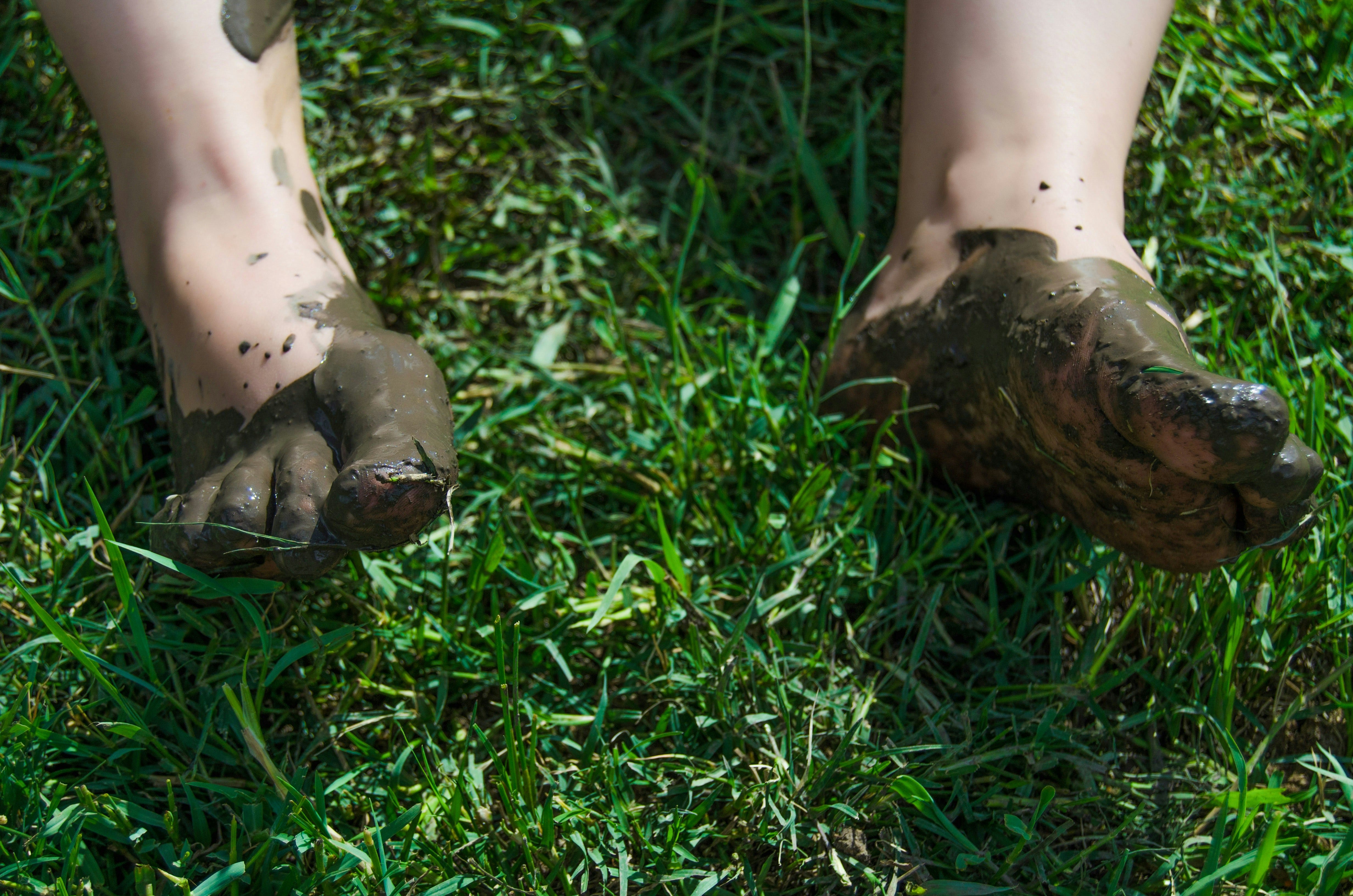
But I don’t want peace: I want engagement. And when you engage, sometimes you run into people who disagree with you. Sometimes you run into people who offend you. Sometimes the ground gets mucky and you have to decide whether you want to get your toes dirty or turn back to dry land.
As long as Substack provides solid ground for thoughtful debate and lets me block out the muck, I’ll continue to engage.
The Babblery can use your support. Please comment on, like, and share this post. Recommend our publication to your friends. Become a paid subscriber. Buy me a coffee. Buy Wally and Tabitha some cat food. Listen to KSQD. Be awesome and carry on.
If you enjoy podcasts, please subscribe to the Babblery on your favorite podcast platform, including Spotify, Amazon, TuneIn, Apple Podcasts, and YouTube.

All of this was written from my head—I make no attempt to quote writers directly here!
I’m sure using his name would put me higher in the algorithm, but frankly, I’m not interested in the person so much as the question of how we deal with this issue. Also, I’ll admit that I only follow the bare outlines of the AT story. Just as I don’t follow stories about serial killers, it’s enough for me to know that serial abusers exist. I like to jump straight from they exist to what can we do about it? I deeply admire the people who make a life’s work out of researching what forms these men, to hunting down and convicting these men, and to helping their victims survive and thrive. But that’s not me and it’s never going to be. Thank you from the bottom of my heart but I don’t need the details.
I couldn’t view more AT content because I didn’t want to log in as myself and thus cue the algorithm to serve me up more of the vile manosphere. Also, he’s got most of his content locked down to paid subscribers, of which he has relatively few.
A lot of women are complaining that it upsets them to see his name on the list of bestsellers that shows up whenever you visit your “home” on Substack. My first reaction to that was, Oh, people pay attention to who’s a bestseller? This interest is so far from my mind not because I’m more high-minded, but because 1) I have so little at stake—I’m not going to see my name there and frankly don’t really hope to, and 2) I’m turned off in general by our culture’s current focus on bestsellers. I don’t, for example, read the New York Times Bestseller List. But I do check out their lists of great novels published each year. I’m very happy for a good writer when they make the bestseller list, but I’ve never to my memory read a book because it was on that list. That’s just me. Just so you know.
In any case, Substack could solve this problem easily. When you block someone, you aren’t supposed to see their content—they could just add that person’s name on the bestseller list so instead of that vile man’s name, we’d just see BLOCKED and that would make us feel awesome! Footnote to this footnote: I wish the New York Times would just replace the T**mp word with “The Big Idiot” in every headline.
The Guardian says Substack doesn’t uphold their community standards, but they didn’t specify whether any of the accounts they found have been reported and what Substack’s exact reason for not banning them is. They could ask! I, for one, would like to know how having “Name the Jews” in your description isn’t a call to violence. https://www.theguardian.com/media/2026/feb/07/revealed-how-substack-makes-money-from-hosting-nazi-newsletters
These are examples of relevant ideas to your arguments.
There is a registered sex offender in my neighborhood. It didn't change my behavior at all. I hope the system is working and that the person has reformed. Everyone can change if they want to. I know nothing of AT or the sex offender. I also told my children he was there, but they weren't going to go knocking on any stranger's door before that. They already knew which houses I knew the owners of, so they'd know which doors to knock on if they fell off their bikes.
There is something about the enemy you know too.
The war on books was started by progressives. YA Twitter for a time was full of people telling us to write in our lanes, at least for our main characters. This was cancel culture. Books were pulled from publication by the publisher because someone got the details wrong---not historical or scientific facts, fictional characterization. Kosovo Jackson went from proponent of the movement to cancelled by it. This opened the doors wide for larger book bans. Frankly, I saw that coming when it started. Conversation without cancelling that allowed individuals to make decisions of whether to read or not would have served the industry far better.
When we think of online spaces as communities of peoples (purposely plural), we know we have to live and let live until and if a rule is broken, even when the sex offender is one block over.
In response to footnote 4, I don't care who is on the bestsellers list either, and neither do I "pay attention" to it, but I also can't not see it. So to think that women were bothered by seeing his name there because they care about who the bestsellers are is missing the fact that it is visual information on our home screens that we can't turn off. I was very triggered by seeing his name and profile picture there. I stopped going to my home screen to avoid it. I tried to avert my eyes when I did. And then it took me the better part of a week to proactively block him because I did not want to have to visit his page at all (maybe there are ways to block without doing that, but I was not aware of any).
You raise some really difficult questions in this piece. An alternative way to frame the questions is to consider the internet itself as the public forum—so if you've already been banned by all of the other major platforms except for x (after previously having been banned by twitter), then maybe you've had all the chances you deserve to prove that you can conduct yourself safely in the public forum. It's like a police officer who has violated regulations and brutalized the public in jurisdiction after jurisdiction after jurisdiction. At some point he has to be banned from joining the police force anywhere or he will continue causing harm.
The internet is already not a safe space for women. Higher profile feminist writers have already experienced much higher rates of harassment on their stacks since he imported his million-plus followers, such as Amanda Montei: "Hey Substack in the past 24 hours I’ve been harassed by more men on this platform than I have in the nearly 5 years I’ve been on it. Seems to be a direct result of your choice to platform AT. Can we do something about this?" So what is the balance? How do we keep ourselves safe and also not surrender this territory?