
Equal and opposite reactions
Advances in our culture always seem to be followed by mirror-image backlash

In my forthcoming interview with retired TV producer Stephanie Jacobs, we talk about a theory I’ve been mulling over: culture is subject to the fundamental laws of physics.
It occurred to me that many of the most striking aspects of what’s going on in the US culturally, and were highlighted in our recent election, are examples of how cultural shifts respond just like matter in response to energy.

Questioning everything
Take the 1960s and its rebellion against authority figures. This was not a bad thing. Authority figures were leading America in a direction that many disagreed with, from an unjust war to ill-advised health decisions. American culture had been too passive, and young people issued a strong corrective in the form of the movement to Question Authority.
But look what has happened: We now live in an age where we are questioning the value of authority itself. We’re so disgusted with the health system that we’re elevating the health advice of people like RFK Jr., getting health news from Joe Rogan, trusting an unregulated supplement company more than we trust a pharmaceutical company subject to rigorous testing. OK, yes, there are issues with Big Pharma, too, but Big Suppla is literally stealing our money and poisoning us with our complete complicity.
In an equal and opposite reaction to Question Authority, we have Ignore All Authority.
Me, Me, Me!
Jumping to the 70s, we got the Me Generation, and again, this was not all bad. Especially women, who had been told that the meaning of their existence was to serve others, needed to hear the message that fulfilled, happy people are better mothers, better workers, better friends, better lovers.
But here we are 50 years later and equally and oppositely, we hear that we have no cultural responsibility for each other. We have twice elevated a politician to the presidency who utters the pronoun “I” more than any other. We’re shrugging our shoulders at the suffering of people we used to care about (war victims in other countries), used to believe in (immigrants), and who even live in our own communities (homeless, drug addicted, etc.).
We are so in love with ourselves that we spend money on more and more stuff (that, consequently, doesn’t make us happier), while voting to make sure that other people get less and less stuff. Sometimes we even vote to give ourselves less and less stuff because we believe in ourselves so deeply that we believe they couldn’t actually mean to take stuff from me…. I’m me!
In an equal and opposite reaction to Love Myself, we got Only Love Myself.
We’re in motion… or at least, we were…
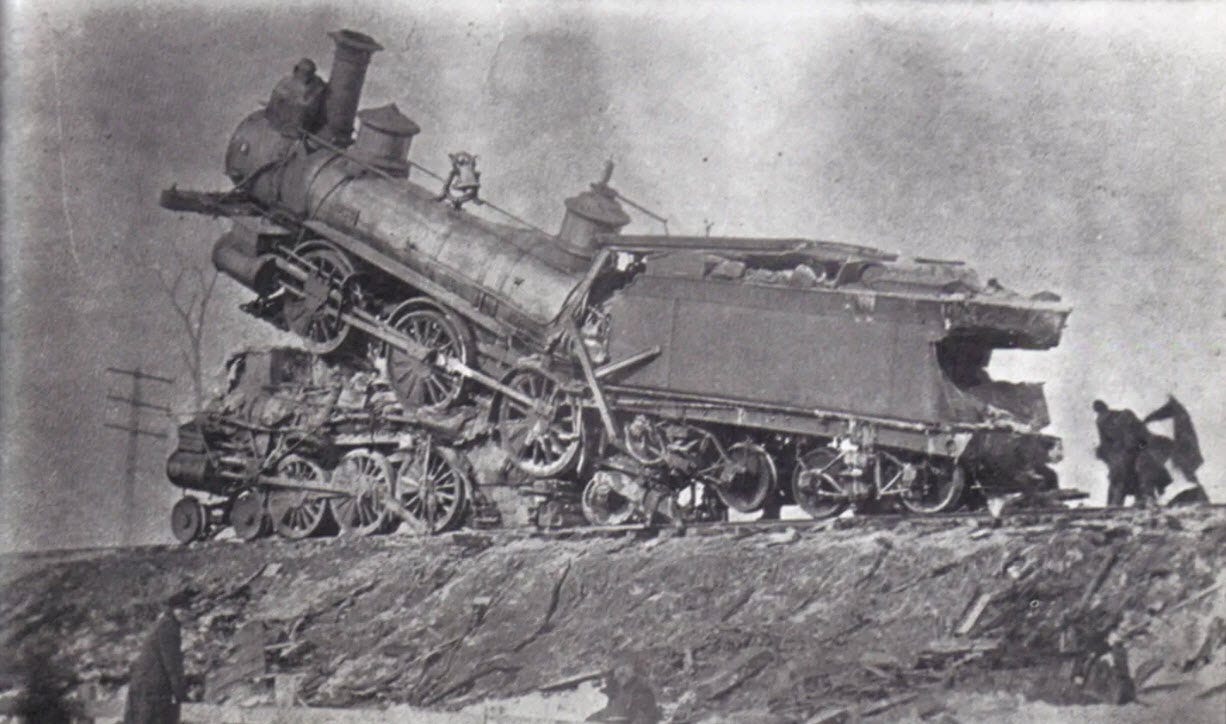
Steph added the point that another law is applicable: Our culture stays in motion, moving forwards, until another body acts against it to slow it down, stop it, or reverse its motion.
Perhaps you’ve forgotten this, but because I had a young transgender person in my life at the time, I haven’t: In the mid-2010s, conservatives were being largely supportive of transgender young people. Our cultural movement on this issue was washing along forward with the wave to accept the LG part of the rainbow.
But then as soon as we thought, huh, seems like this is going to be OK, there were people sitting on our cultural riverbanks saying to each other, wow, this water is moving too fast. And now they are acting to slow it down.
But remember, physics doesn’t take sides
If it’s true that our culture is subject to the laws of physics, that’s actually a somewhat comforting thought. It’s easy to forget that when one side pushes and makes some headway, we can push back. And though each individual might feel that they’re pushing alone, we are never alone. No matter how bleak the outlook may be, the change is not only a “potential,” but also fully guaranteed.
No matter how hard they try to stop that cultural river, we can make sure it will always keep pushing back.

Images courtesy of Wikimedia Commons.